Edit Content
Click on the Edit Content button to edit/add the content.

Uncategorized

Uncategorized

Indgirka: A Precision CNC Machine Components Supplier Built on Technical Integrity

Indgirka: A Precision CNC Machine Components Supplier Built on Technical Integrity Dimensional Discipline in High-Performance Applications A deviation of 0.02 millimetres may appear insignificant during inspection. In calibrated assemblies and load-bearing systems, however, even minor variation can influence mechanical balance and long-term functionality. In industries where tolerance margins are narrow, machining accuracy directly affects operational reliability. The responsibility of a Precision CNC machine components supplier therefore extends beyond producing parts; it contributes to system performance and sustained industrial stability. Indgirka approaches machining with this awareness. Certified standards and advanced CNC technology support components manufactured to precise engineering specifications. Supervision across machining and fabrication ensures consistency from drawing interpretation to finished output. As a Precision CNC machine components supplier, Indgirka focuses on delivering measurable accuracy aligned with application demands. Indgirka: Precision CNC Machine Components Supplier with Centralized In-House Capability Advanced CNC Technology and Technical Coordination Indgirka operates machining, sheet metal processing, and fabrication activities within one facility. Modern CNC platforms support dimensional consistency across varying production volumes, while certified operational practices guide inspection and machining parameters. Hardening and coating processes enhance durability and surface performance in demanding environments. Proto sample manufacturing enables progression from initial design to completed component within a streamlined workflow. Engineering consultancy services assist in evaluating manufacturability before production begins. This combination reinforces Indgirka’s position as a Precision CNC machine components supplier capable of managing complex requirements within a coordinated manufacturing environment.  Indgirka: A Precision CNC Machine Components Supplier Delivering Comprehensive Metal Expertise Machining and Fabrication Capability Across Applications Indgirka manufactures precision-machined components, sheet metal parts, and fabricated assemblies tailored to industrial requirements. Machining utilizes subtractive methods applied to metals and other materials to achieve specified geometries. Sheet metal processing supports both prototype development and high-volume production. Fabrication activities include cutting, bending, welding, and assembly, followed by finishing processes such as powder coating and painting where required. By maintaining these capabilities in-house, Indgirka functions as a Precision CNC machine components supplier able to support coordinated metal component solutions aligned with technical and structural requirements..  Indgirka: A Precision CNC Machine Components Supplier Serving Performance-Critical Industries Experience Across Regulated and Load-Bearing Sectors Indgirka serves aerospace, aviation, defense, electrical, industrial, medical, oil and refining, agriculture, and railway sectors. These industries require components that meet strict dimensional and structural expectations across production cycles. Exposure to such environments reflects the company’s ability to adapt machining and fabrication processes to varied operational contexts. As a Precision CNC machine components supplier, Indgirka applies metalworking expertise through cutting, bending, welding, and assembly processes that support sector-specific applications. .  Indgirka: A Precision CNC Machine Components Supplier Positioned for Strategic Supply Partnerships Supplier Selection as a Competitive Decision Selecting a Precision CNC machine components supplier is not simply a technical comparison; it is a supply chain decision. Organizations that depend on fragmented vendor networks often encounter extended coordination cycles and scheduling variability. Consolidating machining, fabrication, finishing operations, and technical consultation within one manufacturing partner can reduce operational complexity and improve production visibility. Strategic Insight:In high-performance industries, machining accuracy safeguards product integrity, but supplier structure safeguards production continuity. Businesses that treat supplier selection as a strategic investment rather than a transactional choice strengthen their competitive stability. Indgirka combines machining, fabrication, finishing processes, and technical support within one managed facility. While many providers offer CNC capacity, fewer integrate complementary processes under coordinated oversight. This distinction positions Indgirka as a Precision CNC machine components supplier capable of supporting both technical precision and commercial predictability. For procurement and engineering leaders, evaluating a Precision CNC machine components supplier involves assessing scalability, delivery dependability, and coordination efficiency alongside machining capability. Organizations seeking sustained manufacturing alignment can initiate engagement with Indgirka through detailed review of specifications, projected volumes, and scheduling priorities. In competitive industrial markets, delays in supplier alignment can impact product readiness and market response. Establishing a stable manufacturing partnership early enables greater confidence in production planning and operational execution.
Uncategorized

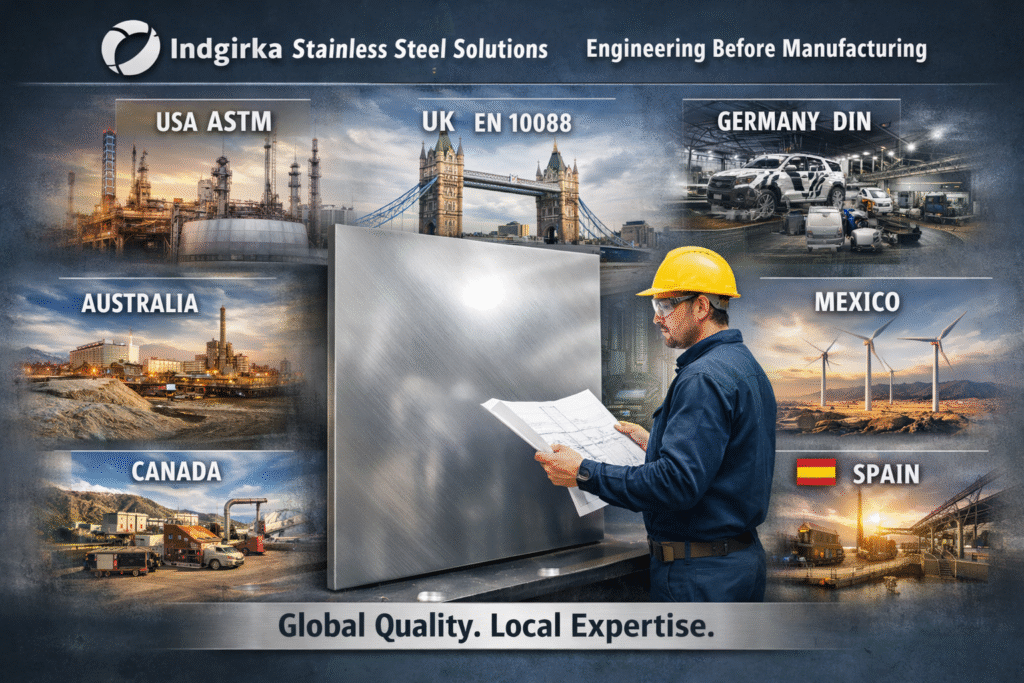
How Indgirka Engineers Stainless Steel Sheet To Match Global Standards

How Indgirka Engineers Stainless Steel Sheet To Match Global Standards   Engineering Before Manufacturing: Indgirka’s principle for accuracy and reliability. Every stainless steel sheet begins with its intended function. Operating conditions, load requirements, environmental exposure, forming limits, welding sequence, and surface finish are considered before fabrication starts. This approach reflects how Indgirka operates. Engineering understanding precedes cutting, bending, or welding. Since 2018, components manufactured in India have supported projects across the United States, the United Kingdom, Germany, Australia, Canada, Mexico, and Spain. Each stainless steel sheet is prepared to meet defined standards and application requirements.

Uncategorized

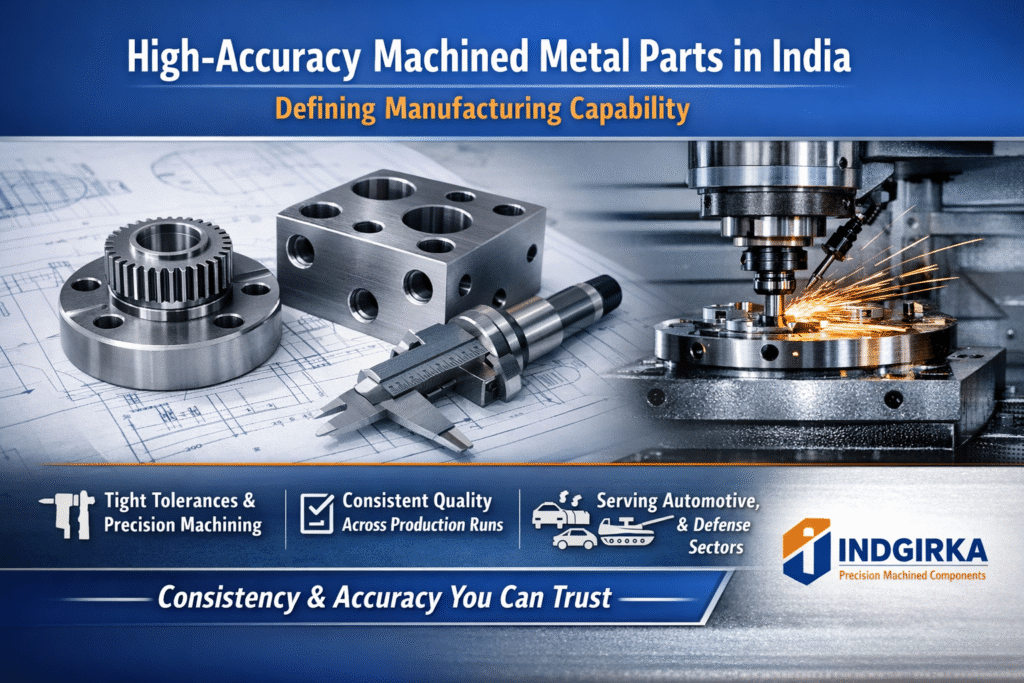
High-Accuracy Machined Metal Parts in India Define Manufacturing Capability

High-Accuracy Machined Metal Parts in India Define Manufacturing Capability Why accuracy now determines manufacturing credibility For manufacturers, high-accuracy machined metal parts in India are no longer a specialised offering; they are a standard requirement. Engineers and sourcing teams assess accuracy through part fitment, machine behaviour, and the absence of recurring issues on the shop floor. As designs become more compact and tolerances tighten, small dimensional errors increasingly lead to fitment problems, premature wear, or operational failure. Manufacturers are evaluated not only on output and price, but on their ability to match drawings exactly across production runs. This places clear emphasis on machining discipline, process control, and direct ownership of quality during production. Accuracy is expected to be built into the machining process itself and not addressed later through inspections, reports, or corrective documentation. How Indgirka Delivers High Accuracy Machined Metal Parts in India Engineering practice translated into repeatable machining results. At Indgirka, high accuracy machined metal parts in India are produced through machining practices overseen by experienced engineers. The company works with CNC milling and turning operations that are planned around part drawings, material behaviour, and required tolerances. Machining is carried out with a clear understanding of how components will be used, assembled, and loaded in real applications. Instead of treating each operation in isolation, machining, finishing, and inspection activities are aligned to ensure dimensional consistency across production runs. Grinding and surface finishing are applied where required to meet functional and fitment needs, not as cosmetic steps. This approach supports the supply of machined components for automotive systems, industrial equipment, defence applications, and electrical assemblies, where accuracy directly influences performance. Here, accuracy is achieved through preparation, machine setup, and execution at the machining stage, rather than relying on corrections after parts are produced. Indgirka Delivering Consistency in High Accuracy Machined Metal Parts in India Why long-term manufacturing relationships are built on execution, not promises For organisations sourcing high accuracy machined metal parts in India, long-term confidence comes from consistent delivery that performs as expected on the shop floor. As production shifts from initial orders to repeat volumes, buyers rely on manufacturing partners that understand requirements, maintain tight tolerances, and deliver consistently without constant oversight. At Indgirka, this reliability is demonstrated in how customer specifications are carried through successive production runs without drift. Components are expected to fit as designed, perform reliably in service, and hold their dimensions as order quantities and schedules change. This consistency simplifies planning for procurement and engineering teams, limits downstream disruptions, and supports stable manufacturing operations over time. In practice, dependable manufacturing relationships are built on the ability to deliver consistent results across repeated production cycles. What are high-accuracy machined metal parts in India? High-accuracy machined metal parts in India are components manufactured within very strict dimensional limits. Each part adheres to detailed engineering drawings with attention to detail. This accuracy strengthens proper alignment within assemblies and reliable performance during mechanical operation. What tolerance levels can manufacturers achieve for high-accuracy machined metal parts in India? Manufacturers producing high-accuracy machined metal parts in India often work with tolerances measured in microns. Many components are machined within  ±10 microns, while demanding applications may require tolerances as tight as ±2 to ±5 microns. What materials are commonly used for high-accuracy machined metal parts in India? High-accuracy machined metal parts in India are commonly manufactured from metals including stainless steel, aluminium, carbon steel, brass, and specialised alloys. Material selection determines strength requirements, operating conditions, corrosion resistance, and the functional role of the component within the assembly. Which industries rely on high-accuracy machined metal parts in India? High-accuracy machined metal parts in India support industries where dimensional stability influences system performance. Automotive systems, defence equipment, electrical assemblies, and industrial machinery depend on accurately machined components to maintain reliable operation. What factors influence the production of high-accuracy machined metal parts in India? The production of high-accuracy machined metal parts in India is influenced by machine tool accuracy, cutting tool selection, material characteristics, and the clarity of engineering drawings. Consistent machining practices maintain dimensional stability across components produced in repeated manufacturing cycles. High-accuracy machined metal parts in India are components manufactured within very strict dimensional limits. Each part adheres to detailed engineering drawings with attention to detail. This accuracy strengthens proper alignment within assemblies and reliable performance during mechanical operation. Manufacturers producing high-accuracy machined metal parts in India often work with tolerances measured in microns. Many components are machined within  ±10 microns, while demanding applications may require tolerances as tight as ±2 to ±5 microns. High-accuracy machined metal parts in India are commonly manufactured from metals including stainless steel, aluminium, carbon steel, brass, and specialised alloys. Material selection determines strength requirements, operating conditions, corrosion resistance, and the functional role of the component within the assembly. High-accuracy machined metal parts in India support industries where dimensional stability influences system performance. Automotive systems, defence equipment, electrical assemblies, and industrial machinery depend on accurately machined components to maintain reliable operation. The production of high-accuracy machined metal parts in India is influenced by machine tool accuracy, cutting tool selection, material characteristics, and the clarity of engineering drawings. Consistent machining practices maintain dimensional stability across components produced in repeated manufacturing cycles.

Uncategorized

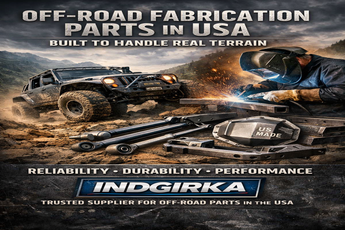
Off-Road Fabrication Parts in USA That Stand Up to Real Terrain

Off-Road Fabrication Parts in USA That Stand Up to Real Terrain Strength Is Defined Long Before the Vehicle Reaches the Trail. Off-road vehicles operate under conditions that impose sustained and uneven stress across all structural components. Rough terrain, continuous vibration, abrupt elevation changes, and repeated impact create conditions that quickly expose the limits of ordinary fabrication practices. Within the off-road fabrication sector in the United States, this has shaped a clear set of expectations around how parts are designed and built. Components are required to support significant load, tolerate repeated stress, and maintain structural integrity over extended use. As a result, off-road fabrication parts in the USA are increasingly evaluated not by appearance or aftermarket styling, but by their performance under real operating conditions. Off-Road Fabrication Parts in USA: Why Indgirka’s Role as a Supplier Matters The Real Consequences of Sourcing Decisions In off-road applications, the consequences of sourcing decisions are rarely immediate. Components may install without issue, yet problems surface later as parts are exposed to repeated stress, vibration, and demanding use. For engineers and procurement teams, this reality places long-term reliability and service life above short-term fitment or appearance. When specifying off-road fabrication parts in USA, the choice of supplier has a direct bearing on durability, maintenance intervals, and overall project reliability long after initial assembly. This is why supply partners such as Indgirka matter—not because of claims made upfront, but because consistency and accountability determine outcomes over time. In this context, performance is shaped as much by who supplies the parts as by how they are designed. Off-Road Fabrication Parts in USA: How Indgirka Supports Long-Term Reliability Consistency Over Time Defines Real Performance For teams working in off-road applications, sourcing decisions determine whether components remain reliable, maintain their service life, and perform consistently once they are in use. Consistent supply, clear specifications, and the ability to support changing requirements all influence outcomes long after installation. In practice, off-road fabrication parts in USA are increasingly sourced through suppliers that recognise the responsibility attached to repeat production and long-term performance. Indgirka supplies off-road fabrication parts in the USA, ensuring consistency across production cycles and alignment with defined performance expectations. When off-road fabrication parts in USA are treated as part of a sustained supply relationship rather than a single transaction, reliability becomes predictable—an outcome that matters to any engineer or builder working under real operating conditions.  

Uncategorized

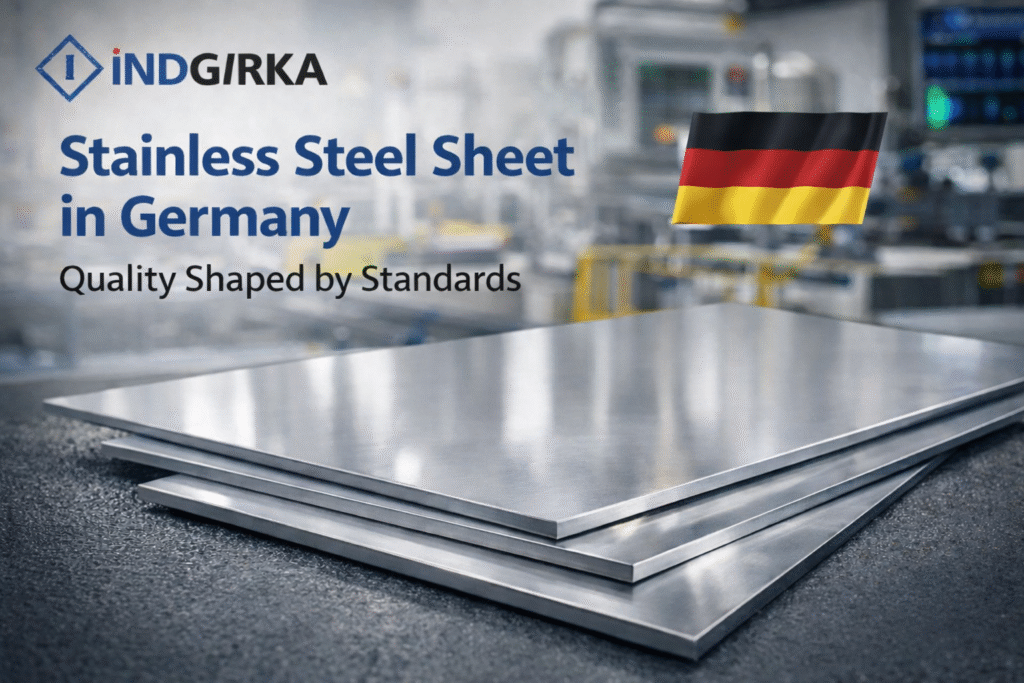
Stainless Steel Sheet in Germany — Quality Shaped by Standards

Stainless Steel Sheet in Germany — Quality Shaped by Standards Why sourcing stainless steel sheets in Germany demands consistency and control Germany’s industrial environment is defined by tightly controlled manufacturing systems and strict compliance requirements, particularly in sectors with long production lifecycles. Stainless steel sheets are widely used across automotive manufacturing, industrial equipment, infrastructure, and fabrication — where performance is evaluated not only at delivery, but throughout processing and the entire service life. For buyers sourcing stainless steel sheet in Germany, quality is rarely viewed in isolation. It is closely tied to consistency, documentation, and predictable material behaviour once the sheet enters production. Even minor variations in thickness, surface finish, or flatness can disrupt fabrication workflows. These challenges often surface during forming, cutting, or assembly, when material behaviour becomes visible under real production conditions. As a result, sourcing decisions in Germany place greater emphasis on repeatability and process control than on short-term availability alone. These expectations influence not only what materials are sourced, but also how they are evaluated once they enter fabrication. Stainless Steel Sheet in Germany — Material Expectations in Practice Grades, standards, and application-driven requirements Stainless steel sheets used in Germany are typically selected based on application-specific requirements rather than generic material categories. Buyers evaluate grade selection, surface condition, and thickness tolerance according to how the sheet will be processed and where it will ultimately be used. Flat-rolled stainless steel sheets are commonly specified for automotive components, industrial enclosures, processing equipment, and architectural applications — where forming behaviour and surface quality directly influence downstream efficiency and production stability. While compliance with EN and DIN standards establishes baseline eligibility, material acceptance is often confirmed during fabrication. Variations in flatness, surface uniformity, or edge condition can slow production and increase rework, even when certifications are in place. For this reason, German buyers assess stainless steel sheet in Germany not only on documentation, but on how reliably the material performs once integrated into their manufacturing systems. Stainless Steel Sheet in Germany — Supply Reliability and Sourcing Confidence From material availability to dependable long-term supply For companies sourcing stainless steel sheet in Germany, material specification is only one part of the decision-making process. Equal importance is placed on supply reliability, traceability, and the ability to receive consistent material over extended periods. Predictable supply supports stable production planning and reduces the need for downstream adjustments once fabrication begins. In standards-driven environments, confidence in continuity often carries the same weight as confidence in material specification. At this stage of sourcing, Indgirka supports customers supplying stainless steel sheets to the German market by aligning material flow with Germany’s compliance-focused production environments. Through controlled sourcing, material verification, protective packaging, and export-ready documentation, Indgirka helps buyers maintain consistency across shipments. The emphasis is not on volume alone, but on continuity — enabling production teams to plan with greater clarity, fewer contingencies, and long-term sourcing confidence.

Uncategorized

Plastic Prototyping in India: A Tool for Innovation, Design Refinement, and Problem-Solving

Plastic Prototyping in India: A Tool for Innovation, Design Refinement, and Problem-Solving Plastic Prototyping in India has emerged as one of the most powerful tools in modern product development. Think of it as early-stage seed funding for your idea — a small, strategic investment that transforms a concept into a tangible, testable model long before full-scale production begins. You research, you ideate, and then you attempt to bring those ideas to life. Yet, there is always a gap between what is visualised on a screen and what actually gets manufactured. This is precisely where plastic prototyping in India becomes a game-changer. It helps teams identify design flaws early, validate ideas faster, and avoid expensive rework later in the development cycle. Instead of discovering issues during production, problems are resolved when change is still affordable. A plastic prototype provides a physical 3D sample of your product — capturing its size, shape, aesthetics, functionality, and even how the material behaves — all before manufacturing begins. Simply put, plastic prototyping in India allows you to touch, test, and evaluate your imagination in the real world. Why Is Plastic Prototyping in India Important? Because early-stage prototypes protect you from major design and production failures. By the time you move to manufacturing, you already know what works and what does not. This gives you complete freedom to refine, adjust, or even redesign your product — without financial losses or brand setbacks. Plastic prototypes also act as powerful decision-making tools. Often, a single look or test of a prototype can define the entire direction of a product. This is why industries such as consumer electronics, automotive, medical devices, packaging, and FMCG increasingly rely on plastic prototyping in India. It reduces production risks, shortens development cycles, and enables brands to launch high-quality products faster. For once, trial and error actually works — and works in your favour. How Does Plastic Prototyping in India Work? One of the most impressive aspects of plastic prototyping is the wide range of techniques available. Depending on your design complexity, functional requirements, and budget, different methods can be used — each offering distinct advantages. 3D Printing (Additive Manufacturing) Ideal for rapid prototyping, early-stage samples, design exploration, and functional testing. CNC Machining Best suited for detailed geometries and prototypes that demand high strength and dimensional accuracy. Vacuum Casting Ideal for producing small batches of high-quality prototypes that closely resemble final production parts. Injection Moulding for Prototypes Used for mass-production-like samples, durability testing, and cost-effective repeatable units. This method is especially useful when validating how a product behaves at scale. Ultimately, the application determines the most suitable process. Conclusion Plastic prototyping in India acts as your most honest critic throughout product development — helping you test assumptions, validate designs, and refine problems long before they turn into costly mistakes. It transforms uncertainty into clarity and ideas into confident, production-ready solutions.

Uncategorized

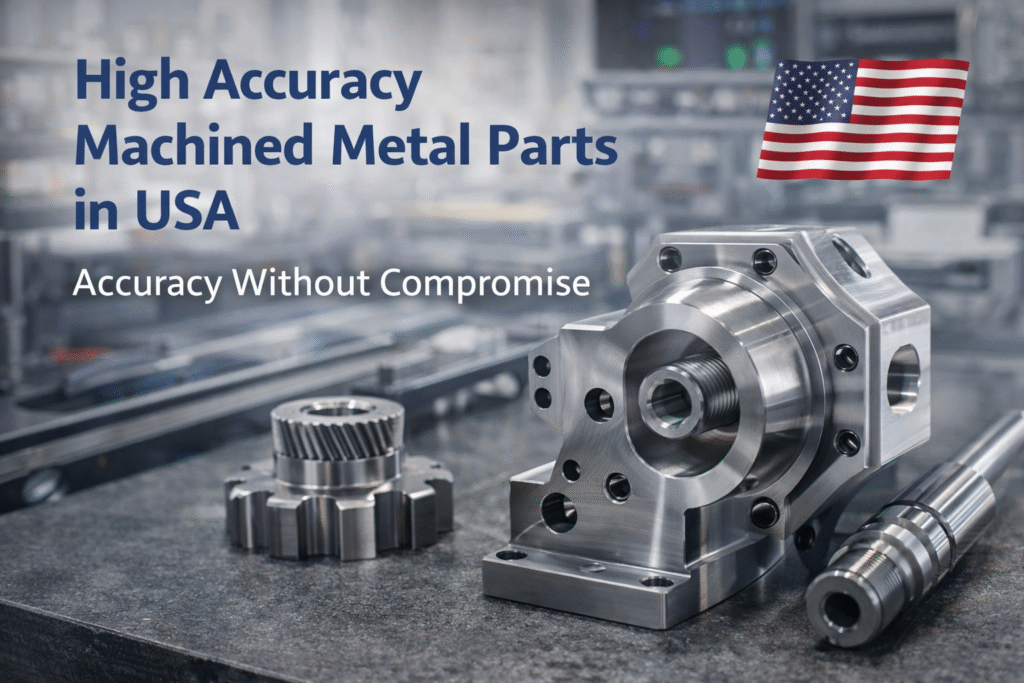
High Accuracy Machined Metal Parts in USA — Accuracy Without Compromise

High Accuracy Machined Metal Parts in USA — Accuracy Without Compromise The role of tolerances in performance and operational risk In the United States, manufacturing decisions are shaped by production scale, regulatory compliance, and operational risk. Components are expected to perform reliably across long production runs and under demanding service conditions. For buyers sourcing high accuracy machined metal parts in USA, dimensional precision directly impacts assembly fit, equipment lifespan, and operational safety. Even micron-level deviations can lead to misalignment, vibration, accelerated wear, or premature failure. These issues often originate during machining and later surface as downtime, warranty exposure, and increased lifecycle costs. In sectors such as automotive, energy, industrial equipment, and heavy engineering, such failures carry measurable operational and financial consequences. For this reason, machining accuracy is treated not merely as a specification to be achieved, but as a foundational requirement for stable production and dependable long-term performance. High Accuracy Machined Metal Parts in USA — Controlled Execution Process discipline and production consistency Achieving high accuracy in machined metal parts requires more than advanced equipment alone. It depends on disciplined process control at every stage of production. Consistency is maintained through clearly defined workflows covering material selection, machining parameters, in-process inspection, and documentation. Dimensional checks are carried out during production rather than being limited to final inspection. This allows deviations to be identified and corrected early, preventing variation from affecting batch consistency and downstream assemblies. At Indgirka, machining accuracy is supported by structured procedures that include material traceability, in-process verification, final inspection, and customer-aligned documentation. Repeatability is ensured through standardised programs, machine setups, and quality checks, so components supplied over time remain consistent. Secondary operations such as deburring, surface finishing, and controlled handling are integrated into a single production flow to minimise variation. For sourcing and procurement teams, this disciplined approach reduces uncertainty, shortens qualification cycles, and supports predictable production planning. High Accuracy Machined Metal Parts in USA — Value Through Predictability Operational confidence and supply continuity For buyers sourcing high accuracy machined metal parts in USA, long-term value is defined by predictability. When components arrive as specified and perform as expected, production schedules remain stable, inspection delays are reduced, and downstream teams avoid reactive adjustments. Over time, this stability lowers rework, limits supplier escalations, and improves coordination between procurement, quality, and operations. Reliable delivery also builds confidence — each successful batch reinforces assurance that future production will meet the same standard. In this context, machining capability extends beyond supplying parts. It becomes a practical enabler of continuity, control, and sustained manufacturing performance.

Uncategorized

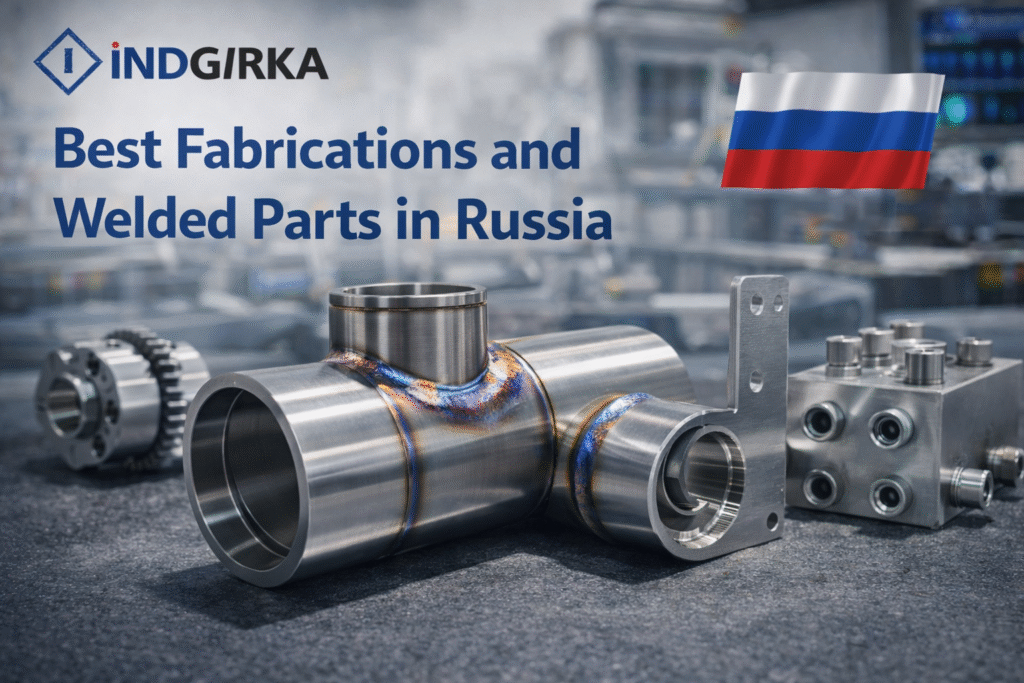
Best Fabrications and Welded Parts in Russia — Indgirka’s Alignment with Industrial Requirements

Best Fabrications and Welded Parts in Russia — Indgirka’s Alignment with Industrial Requirements How Fabrication and Welding Quality Are Defined in Demanding Industrial Environments Russia’s industrial sectors place strong emphasis on reliability, durability, and seamless execution. In industries such as heavy manufacturing, energy, infrastructure, and industrial equipment, fabricated and welded components are relied upon for continuous, day-to-day operation — not merely for initial installation. For buyers evaluating the best fabrications and welded parts in Russia, quality is measured by how consistently fabricated assemblies and welded joints perform under load, stress, and real operating conditions. Performance over time matters more than appearance at delivery. Within this environment, fabrication accuracy and weld consistency are not treated as isolated technical steps. They are understood as part of an integrated manufacturing discipline. Dimensional control, joint preparation, and execution standards directly influence deployment, installation efficiency, and service reliability. As a result, sourcing decisions in Russia are shaped less by stated capability and more by confidence that fabrication and welding practices are aligned with long-term industrial requirements. Best Fabrications and Welded Parts in Russia — Indgirka’s Fabrication and Welding Practices How fabrication and welding quality are established in practice The best fabrications and welded parts in Russia are defined by the discipline applied at every stage of production. Accurate cutting, proper fit between components, and controlled assembly sequences contribute directly to structural stability and dimensional consistency. Welding quality is influenced by joint preparation, welding execution, and continuous attention to process control as work progresses. Together, these factors determine how fabricated assemblies behave over extended service life, particularly in demanding industrial environments. At Indgirka, fabrication and welding are planned and executed as a single, continuous process. Decisions made during cutting, fit-up, and welding directly shape the integrity of the final assembly. Fit, alignment, and weld condition are reviewed during production, allowing deviations to be corrected before they move downstream. This structured approach results in fabricated and welded parts that remain consistent across assemblies and continue to perform as expected during installation and sustained service. Best Fabrications and Welded Parts in Russia — Indgirka as a Reliable Manufacturing Partner From fabrication quality to long-term sourcing confidence For buyers sourcing the best fabrications and welded parts in Russia, long-term value is defined by reliability rather than one-time delivery. Consistent fabrication quality, stable welding performance, and clear documentation reduce downstream uncertainty and support predictable project timelines. When fabricated assemblies and welded structures perform as intended during installation and service, the risk of rework, delays, and corrective intervention is significantly reduced. By combining controlled fabrication practices, disciplined welding execution, and structured inspection and documentation, Indgirka supports customers supplying to Russian industrial markets where continuity and dependability are essential. The focus is not on volume alone, but on consistency — enabling procurement and engineering teams to plan with confidence, knowing that fabrication and welding performance will remain stable across repeated orders and long production cycles. Which industries use fabricated and welded parts in Russia? Fabricated and welded parts are used in Russia’s heavy industry, energy, infrastructure, and equipment manufacturing sectors. They are used in structural frames, industrial machinery, pipelines, pressure equipment, and large assemblies operating under demanding industrial conditions. What quality standards are important for fabricated and welded industrial parts? Fabricated and welded industrial parts are commonly produced under standards such as ISO 3834 for welding quality management, ISO 5817 for weld acceptance levels, AWS D1.1 for structural welding, and relevant GOST specifications used in Russian industrial projects. What materials are commonly used in fabricated and welded industrial components? Fabricated and welded industrial components are manufactured from materials like carbon steel, stainless steel, alloy steel, and structural steel. The material is selected based on load requirements, corrosion exposure, operating temperature, and the performance demands of the application. How are fabricated and welded assemblies inspected for quality and reliability? Fabricated and welded assemblies are inspected through dimensional verification, visual weld inspection, and non-destructive testing methods, including ultrasonic testing, radiographic testing, and dye penetrant inspection to confirm structural integrity and weld quality. What should buyers consider when selecting a fabrication and welding partner? Buyers assess fabrication experience, welding qualifications, production control, inspection procedures, and technical documentation before selecting a fabrication and welding partner. Consistent dimensional accuracy, stable weld quality, and the ability to meet delivery schedules are essential for reliable industrial supply. Fabricated and welded parts are used in Russia’s heavy industry, energy, infrastructure, and equipment manufacturing sectors. They are used in structural frames, industrial machinery, pipelines, pressure equipment, and large assemblies operating under demanding industrial conditions. Fabricated and welded industrial parts are commonly produced under standards such as ISO 3834 for welding quality management, ISO 5817 for weld acceptance levels, AWS D1.1 for structural welding, and relevant GOST specifications used in Russian industrial projects. Fabricated and welded industrial components are manufactured from materials like carbon steel, stainless steel, alloy steel, and structural steel. The material is selected based on load requirements, corrosion exposure, operating temperature, and the performance demands of the application. Fabricated and welded assemblies are inspected through dimensional verification, visual weld inspection, and non-destructive testing methods, including ultrasonic testing, radiographic testing, and dye penetrant inspection to confirm structural integrity and weld quality. Buyers assess fabrication experience, welding qualifications, production control, inspection procedures, and technical documentation before selecting a fabrication and welding partner. Consistent dimensional accuracy, stable weld quality, and the ability to meet delivery schedules are essential for reliable industrial supply.

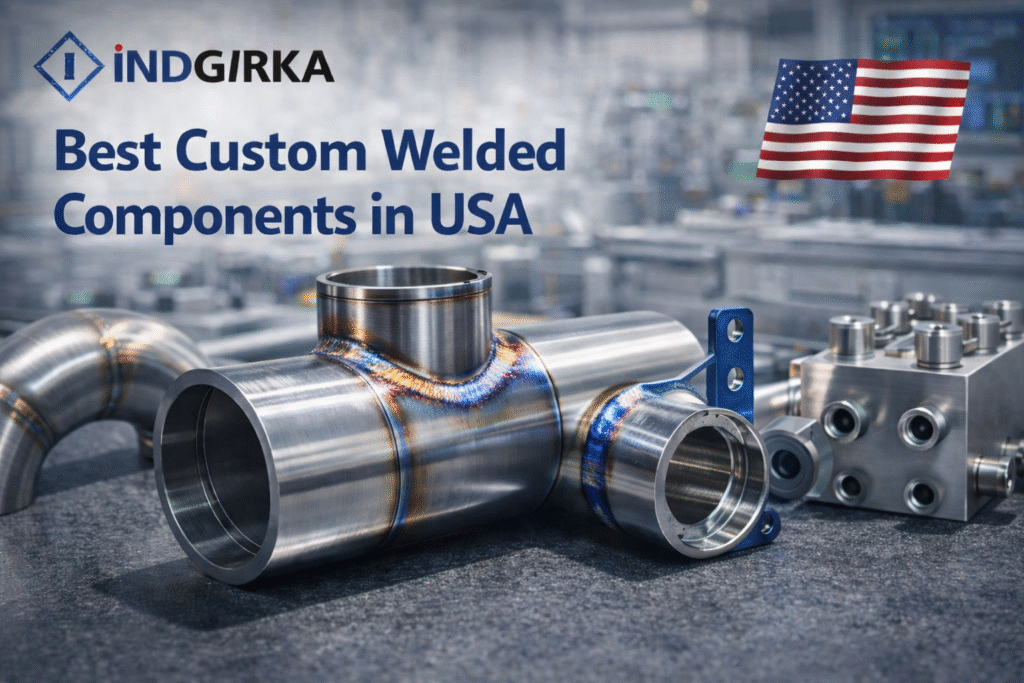
Best Custom Welded Components in USA
Uncategorized

Best Custom Welded Components in USA

Best Custom Welded Components in USA Indgirka’s approach to advanced engineering and manufacturing excellence What does a customer look for in a reliable manufacturing partner for their products? Consistency. Quick turnaround time. Accuracy. Isn’t it? With this clear focus, Indgirka has positioned itself as a trusted manufacturer for global buyers seeking the best custom welded components in USA. The company works closely with OEMs, fabricators, and project teams, delivering precision components through advanced CNC technology and a highly skilled engineering workforce — making Indgirka a dependable, long-term solutions partner. Indgirka is recognised as a premier manufacturer and supplier, delivering engineered excellence to a wide range of industries including aerospace, agriculture, aviation, defence, and other demanding sectors where quality and reliability are non-negotiable. Delivering the Best Custom Welded Components in USA through a Diverse Product Portfolio Behind every strong welded assembly lies the precision and durability of the parts that build it.Indgirka manufactures a broad range of components, seamlessly combining custom welding with sheet metal parts, precision-machined components, fabricated and welded structures, casting and forging parts, material-handling equipment,tubular and hose components, as well as rubber and plastic parts. Each product category supports different industrial applications while following the same uncompromising commitment to quality, dimensional accuracy, and fitment. This integrated capability allows Indgirka to support customers seeking the best custom welded components in USA — not as standalone items, but as complete, application-ready solutions. How Indgirka Delivers the Best Custom Welded Components in USA Custom welding at Indgirka begins with a deep understanding of customer requirements. Clients share drawings, specifications, or conceptual designs, and the engineering team conducts detailed reviews covering material selection, tolerances, and manufacturability before production begins. Each project moves through clearly defined stages — design validation, welding and fabrication, machining where required, surface finishing, inspection, and final dispatch. Quality checks are integrated into every stage rather than added at the end.This disciplined approach enables Indgirka to consistently deliver thebest custom welded components in USA, aligned with real-world applications, project timelines, and on-site working conditions.

Uncategorized

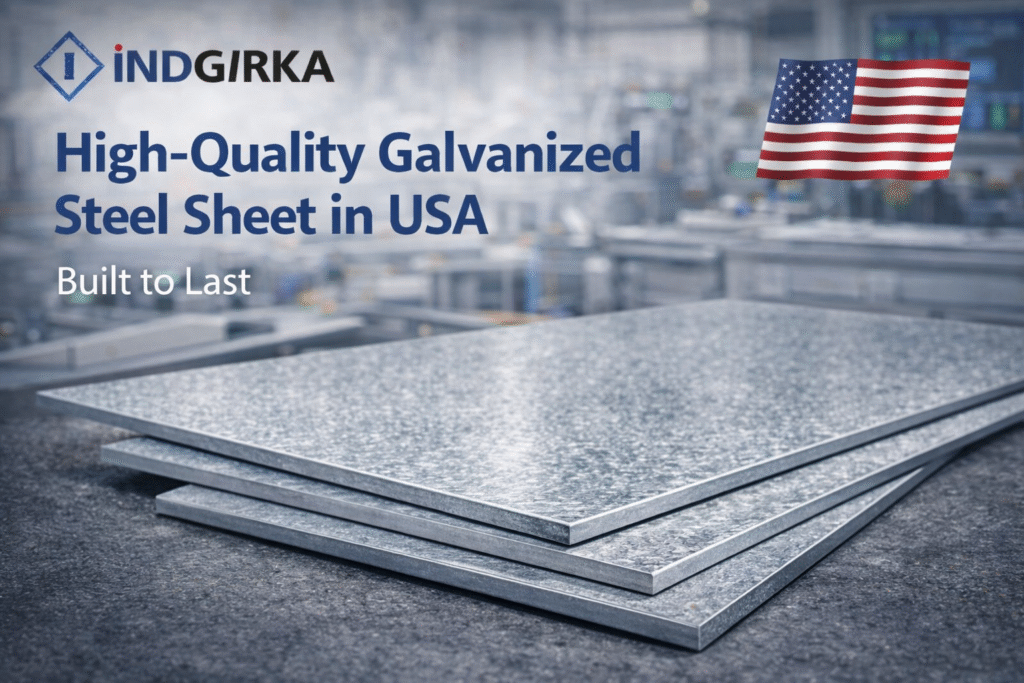
Galvanized Steel Sheet in USA — Built for Weather, Wear, and Time

Galvanized Steel Sheet in USA — Built for Weather, Wear, and Time A simple sheet, coated for protection, is used in places we pass every day. From busy highways to quiet farm fields, from growing suburbs to industrial zones, steel is expected to do one thing well — last. Galvanized steel sheet features a protective zinc coating that helps it withstand rain, snow, humidity, and the elements over extended periods outdoors. That is why you often see it quietly at work in roofs, fences, ducts, frames, roadside structures, and utility enclosures. The demand for galvanized steel sheet in USA is driven by the need for reliability: materials that can endure changing seasons, wide temperature shifts, and constant exposure, while remaining strong and usable. It may seem like a simple sheet of metal, but in reality, it supports a great deal of everyday life. Galvanized Steel Sheet in USA — What Buyers Expect and How Indgirka Responds From requirement sheets to real-world performance Indgirka works closely with buyers across the United States who source galvanized steel for different projects and industries. What matters most to them is not just the material itself, but how reliably it performs once it reaches the site or assembly. Buyers of galvanized steel sheet in USA want material that feels dependable — a uniform coating, true thickness, strong corrosion resistance, and the same quality every time they place an order. They also expect clear documentation, packaging suited for long-distance transport, and responses that respect project timelines. Indgirka’s approach is simple and practical: listen carefully, understand the application, and supply galvanized material and components that match the conditions in which they will actually be used. How Indgirka Supports Buyers of Galvanized Steel Sheet in USA Not just material — a complete manufacturing partnership For Indgirka, supplying galvanized material is only one part of the relationship. The real work lies in how the components are engineered and delivered. The team supports customers from the design stage itself — studying drawings, advising on thickness and feasibility, developing samples, and then moving into regular production. Cutting, bending, fabrication, welding, and assembly are completed in-house, and the finished parts are carefully packed for export. For clients sourcing galvanized steel sheet in USA, this means they receive more than raw material — they receive components that are ready to use, supported by a reliable and steady supply. This is the Indgirka approach: to work alongside customers as a partner in manufacturing, not just as a supplier. FAQs About Galvanized Steel Sheet in USA Where is it mostly used in USA? In the United States, galvanized steel sheet is commonly used in building roofs and wall panels, HVAC ducts, agricultural equipment, highway guardrails, utility enclosures, fencing, storage tanks, and automotive body panels where corrosion resistance is required. What are the possible advantages of using galvanized steel sheet? One of the main benefits is that it resists corrosion and lasts for many years with minimal maintenance. The zinc coating protects the steel from moisture and environmental exposure, while also being cost-effective as compared to many corrosion-resistant metal alternatives. How long does galvanized steel sheet last in outdoor environments? Outdoors, it can last about 50 to 70 years, depending on the climate and coating thickness. In milder environments, the lifespan can be even longer, as the protective coating slows corrosion and weather-related wear. What are the decision factors that buyers should consider when purchasing galvanized steel sheet? Buyers should consider steel grade, coating thickness, corrosion resistance, dimensional accuracy, and supplier reliability. What thickness and coating options are available for galvanized steel sheets? In the United States, ASTM A653 is the standard used for material and zinc coating specifications. Thickness generally ranges from 0.25 mm to about 3.5 mm, depending on the application. Coating levels are commonly designated as G30, G60, or G90. In the United States, galvanized steel sheet is commonly used in building roofs and wall panels, HVAC ducts, agricultural equipment, highway guardrails, utility enclosures, fencing, storage tanks, and automotive body panels where corrosion resistance is required. One of the main benefits is that it resists corrosion and lasts for many years with minimal maintenance. The zinc coating protects the steel from moisture and environmental exposure, while also being cost-effective as compared to many corrosion-resistant metal alternatives. Outdoors, it can last about 50 to 70 years, depending on the climate and coating thickness. In milder environments, the lifespan can be even longer, as the protective coating slows corrosion and weather-related wear. Buyers should consider steel grade, coating thickness, corrosion resistance, dimensional accuracy, and supplier reliability. In the United States, ASTM A653 is the standard used for material and zinc coating specifications. Thickness generally ranges from 0.25 mm to about 3.5 mm, depending on the application. Coating levels are commonly designated as G30, G60, or G90.

Scroll to Top