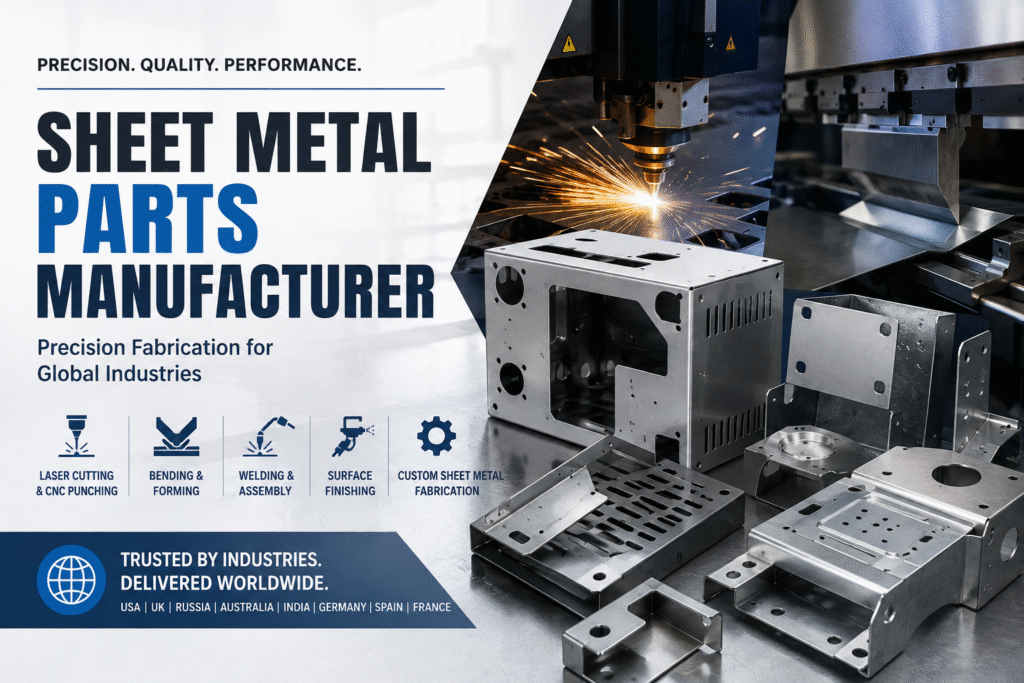
Steel Sheet South Africa: Materials, Gauges and Tolerances for Sheet Metal Parts
Steel Sheet South Africa buyers need to consider three important factors before ordering sheet metal parts: material, thickness (gauge) and tolerance. These specifications affect how accurately a part fits, how long it lasts and how much it costs. Choosing the right steel sheet for your project can help reduce manufacturing errors, prevent rework and save money. This guide explains different sheet metal materials, gauges and tolerances, helping South African buyers make informed decisions when ordering steel sheet parts. Steel or stainless steel: which should you choose? Mild (carbon) steel is the most common choice for structural, automotive and general industrial parts. It is strong, easy to form and weld, and cost-effective. Its main weakness is corrosion, so it usually needs painting, galvanising or powder coating for outdoor or humid use. Stainless steel resists rust and staining much better, which makes it suitable for food equipment, water-facing components, hygienic environments and outdoor enclosures. It costs more than mild steel and can be harder to form, but it often needs less maintenance over its life. As a simple rule, use mild steel for internal or painted parts where cost matters, and stainless steel where corrosion resistance or appearance is important. Your fabricator can advise on the grade that suits your application, including whether a coating is needed. Understanding sheet metal gauges Sheet thickness is usually given as a gauge number. The rule that trips people up is that a higher gauge number means thinner sheet. A 10-gauge sheet is thicker than a 16-gauge sheet. Approximate thicknesses for mild steel, using the common Manufacturers’ Standard Gauge: Gauge Approx. thickness (mild steel) 10 3.42 mm 12 2.66 mm 14 1.90 mm 16 1.52 mm 18 1.22 mm 20 0.91 mm Stainless steel gauges do not match mild steel exactly, so always check the gauge chart for the specific material. Also confirm whether your drawing gives thickness in millimetres or gauge. Many drawing errors come from mixing the two. What tolerances mean for your parts A tolerance is the permitted variation from the dimension on your drawing. Tight tolerances improve fit and accuracy, but they usually increase cost and inspection time. Loose tolerances are cheaper, but they may cause assembly problems. Typical considerations include: Only specify tight tolerances where the function requires them. A good practice is to mark critical dimensions on the drawing and use standard tolerances for everything else. If you are unsure, ask your fabricator to review the drawing before production. Tips for ordering steel sheet parts in South Africa Where to get sheet metal parts made If you need a manufacturer that handles the full process, Indgirka produces sheet metal parts for prototypes, low-volume runs and high-volume production. Their services include CNC laser cutting, bending, welding and machining, with coating and assembly under one roof. You can also browse their parts image library to see examples of components before you send your own drawings. Indgirka lists ISO 14001, ISO 45001 and IATF certificates on its homepage, and its industry page covers the sectors they serve. If you are sourcing outside India, confirm with them directly that they can supply to South Africa, including shipping costs and delivery times. You can request a quote or contact the team with your drawing and specifications. For other processes, see their pages on casting and forging parts and rubber and plastic parts. Final thought Getting steel sheet right comes down to three decisions: the material, the gauge and the tolerance. Make them clearly, share a complete drawing with your supplier, and ask questions before production starts. That approach reduces errors, avoids rework and gets you parts that fit the first time. Note: Gauge thickness values are general reference figures. Check the exact specification with your supplier before production. Confirm all certifications, lead times and South African delivery details directly with the manufacturer